Laboratory and applied research on biomass, polymer waste, and end-of-life tire (ELT) processing

Find out the price

GreenPower provides laboratory and applied research services aimed at identifying effective technological solutions for the processing of biomass and other carbon-based materials.

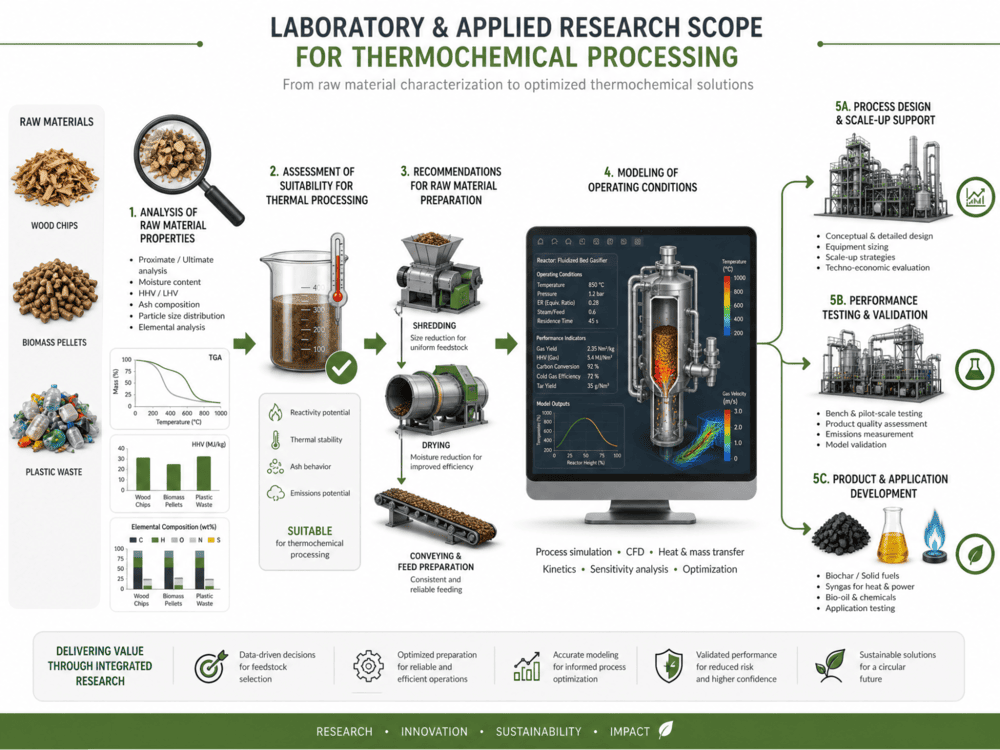
We believe that technology selection should be based not only on the type of feedstock but also on the requirements for the final product. Therefore, our research covers the entire process chain—from the analysis of the raw material and its preparation for processing to the determination of optimal operating parameters and the evaluation of the properties of the resulting product.

This approach helps reduce technological risks during project implementation, improve the predictability of outcomes, and identify solutions that meet the customer’s objectives within the framework of modern circular economy principles and resource-efficiency strategies.
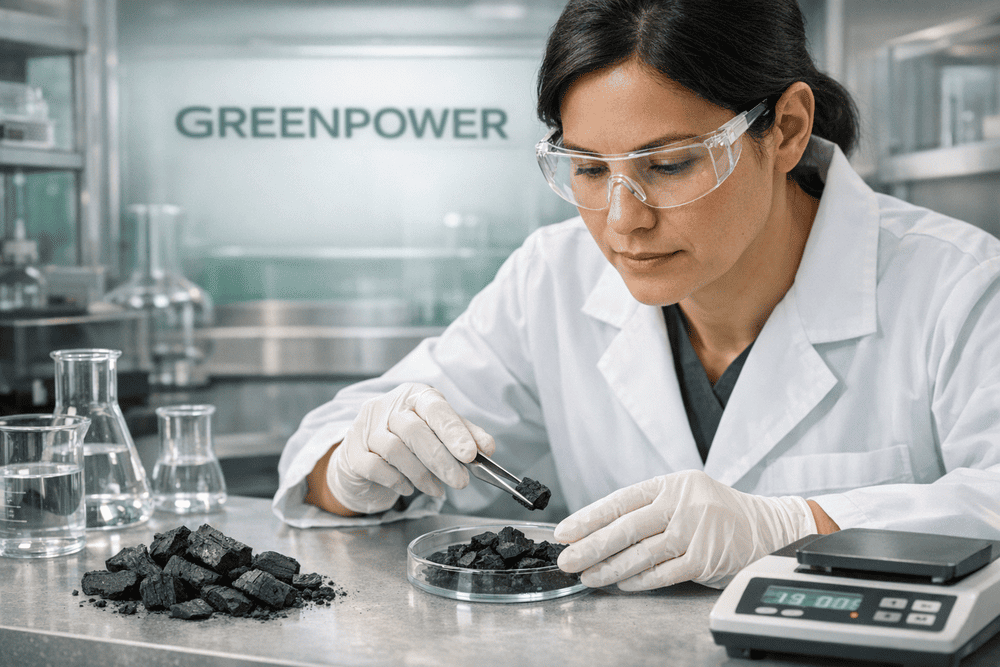
What types of raw materials do we research?

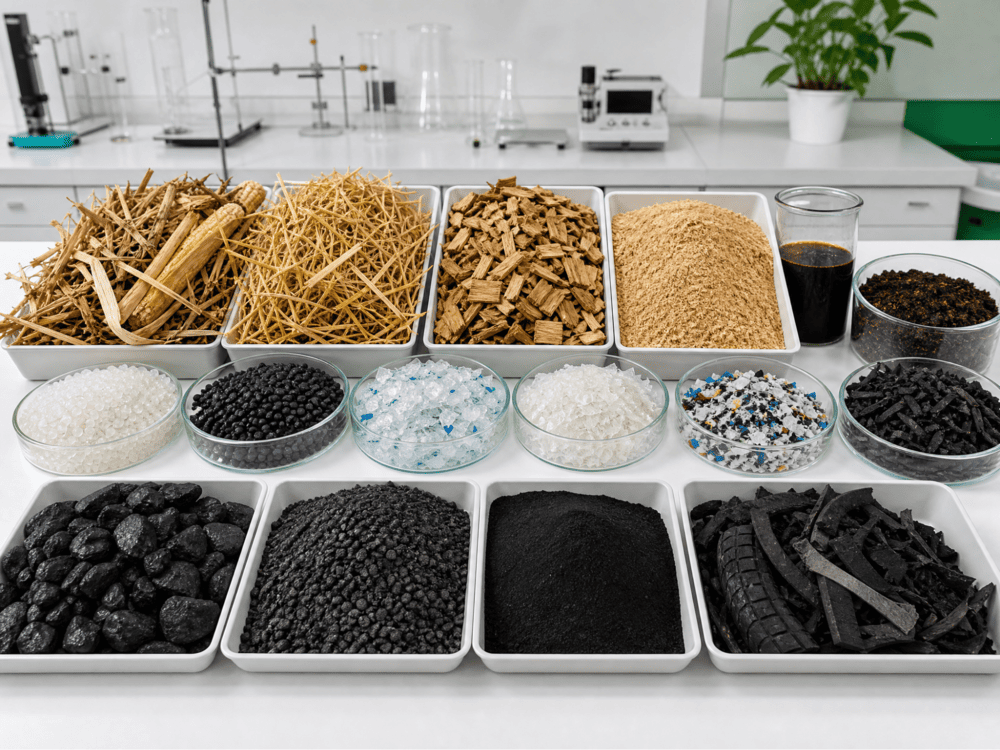
  • Agricultural, woody, and other types of biomass;
  • Lignin-containing waste materials;
  • Polymer waste, including polyethylene, polypropylene, polystyrene, and other plastics;
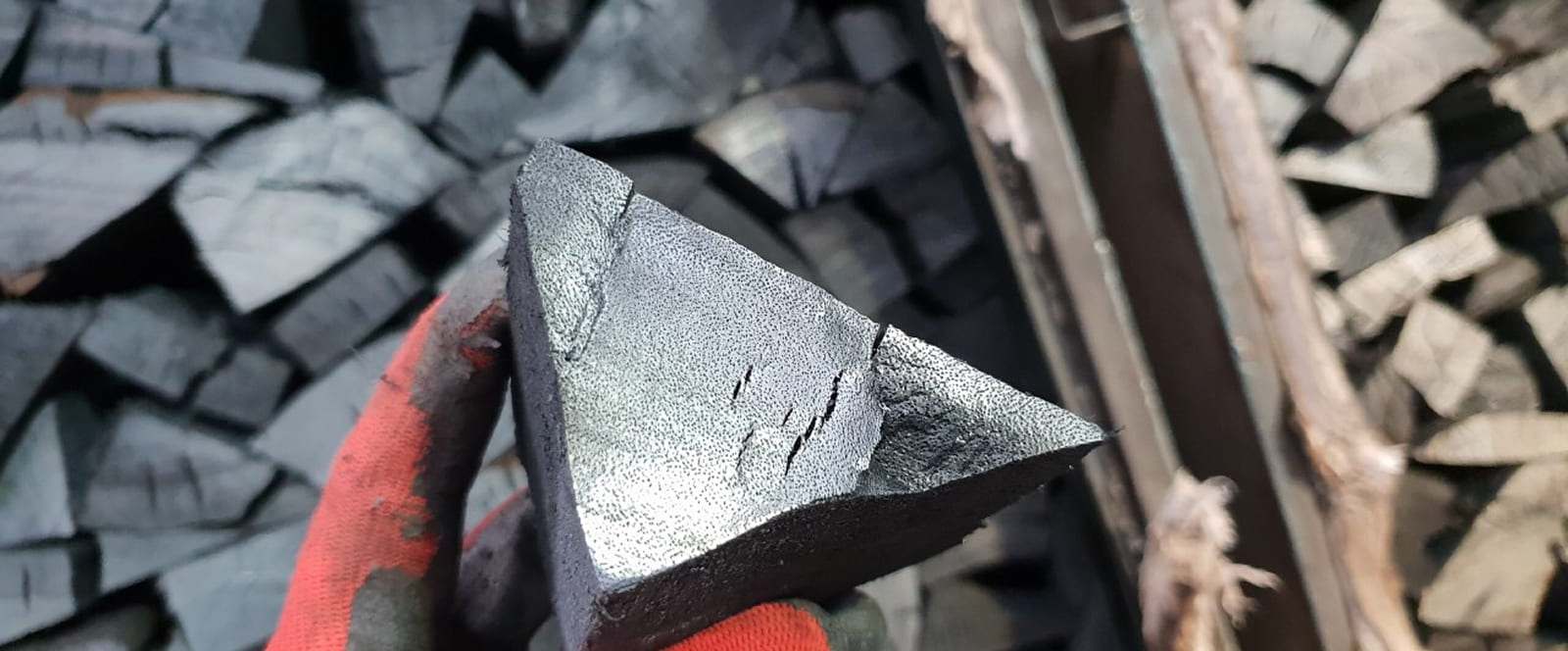
  • Rubber waste, including end-of-life tires (ELTs);
  • Sewage sludge and sludge-derived waste;
  • Other carbon-based materials.

Scope of Our Research

  • Characterization and analysis of feedstock properties;
  • Assessment of feedstock suitability for thermal processing;
  • Development of feedstock preparation recommendations;
  • Modeling and optimization of process operating conditions;
  • Determination of solid, liquid, and gaseous product yields;
  • Evaluation of carbonaceous solid residue quality;
  • Preparation of recommendations for technology scale-up and industrial implementation.

Feedstock Preparation for Processing

  • Size Reduction and Comminution – Selection of the optimal particle size and evaluation of the impact of particle size distribution on downstream processing performance.
  • Feedstock Drying – Determination of initial and target moisture content and selection of the most suitable feedstock pre-treatment approach.
  • Briquetting – Assessment of feedstock suitability for densification, evaluation of binder requirements, and analysis of briquette properties after compaction.
  • Mechanical Feedstock Preparation – Evaluation of material structure, bulk density, and processing behavior prior to thermal treatment.

Thermal Process Modeling

  • Torrefaction – Selection of optimal temperature profiles, residence time, and processing conditions to achieve the desired product characteristics.
  • Pyrolysis – Determination of optimal process parameters, carbonaceous solid residue yield, and the properties of liquid and gaseous products.
  • Activation – Assessment of the suitability of feedstock and carbonaceous residue for the production of activated carbon and sorbent materials.

Comprehensive Feedstock and Product Analysis

  • Moisture content determination;
  • Ash content determination;
  • Volatile matter analysis;
  • Higher Heating Value (HHV) determination;
  • Particle size distribution analysis;
  • Lignin content analysis;
  • Evaluation of briquetting suitability;
  • Assessment of binder requirements;
  • Mechanical strength testing;
  • Bulk density determination of feedstock, briquettes, and carbonaceous residue;
  • Evaluation of the efficiency of size reduction, drying, and thermal processing operations.

Quality Control and Environmental Assessment

  • Heavy metals analysis;
  • Determination of polycyclic aromatic hydrocarbons (PAHs) content;
  • Analysis of organochlorine compounds and other potentially hazardous substances;
  • Assessment of compliance with end-product specifications and quality requirements;
  • Preliminary evaluation of certification potential according to applicable international frameworks and standards, including IBI, EBC, REACH, and other relevant regulatory requirements.

Deliverables Provided to the Customer

Upon completion of the research program, the customer receives:

  • A technical assessment of feedstock suitability for processing;
  • Recommendations for feedstock preparation and pre-treatment;
  • Recommendations on torrefaction, pyrolysis, briquetting, and activation operating parameters;
  • An evaluation of carbonaceous residue yield and its key quality characteristics;
  • An analysis of process energy efficiency;
  • Recommendations for the selection of the most appropriate process configuration;
  • Technical data and engineering insights required for scaling up from laboratory studies to pilot-scale and industrial implementation.

Business Benefits

Our research helps businesses to:

  • Reduce the risk of selecting an inappropriate technology;
  • Understand the actual value and processing potential of a specific feedstock;
  • Identify material limitations and advantages before investing in equipment;
  • Define requirements for feedstock preparation systems and thermal processing units;
  • Improve consistency and repeatability of final product quality;
  • Accelerate the transition from concept validation to commercial-scale operation.

GreenPower as a Technology Partner

We view the research phase as the foundation for the successful design and implementation of a processing solution. For this reason, GreenPower can support customers not only during the evaluation stage but throughout subsequent project phases—from process design and technology development to equipment selection, commissioning, and ongoing process optimization.

Would You Like to Assess the Processing Potential of Your Feedstock?

Share information about your feedstock and project objectives with us, and we will propose a research program tailored to your needs. Our studies help identify the most effective processing pathway, define feedstock preparation requirements, and establish the operating parameters needed to achieve the desired end-product characteristics.

Discuss Your Carbonization Project

Our engineering team will review your requirements and propose the appropriate system.