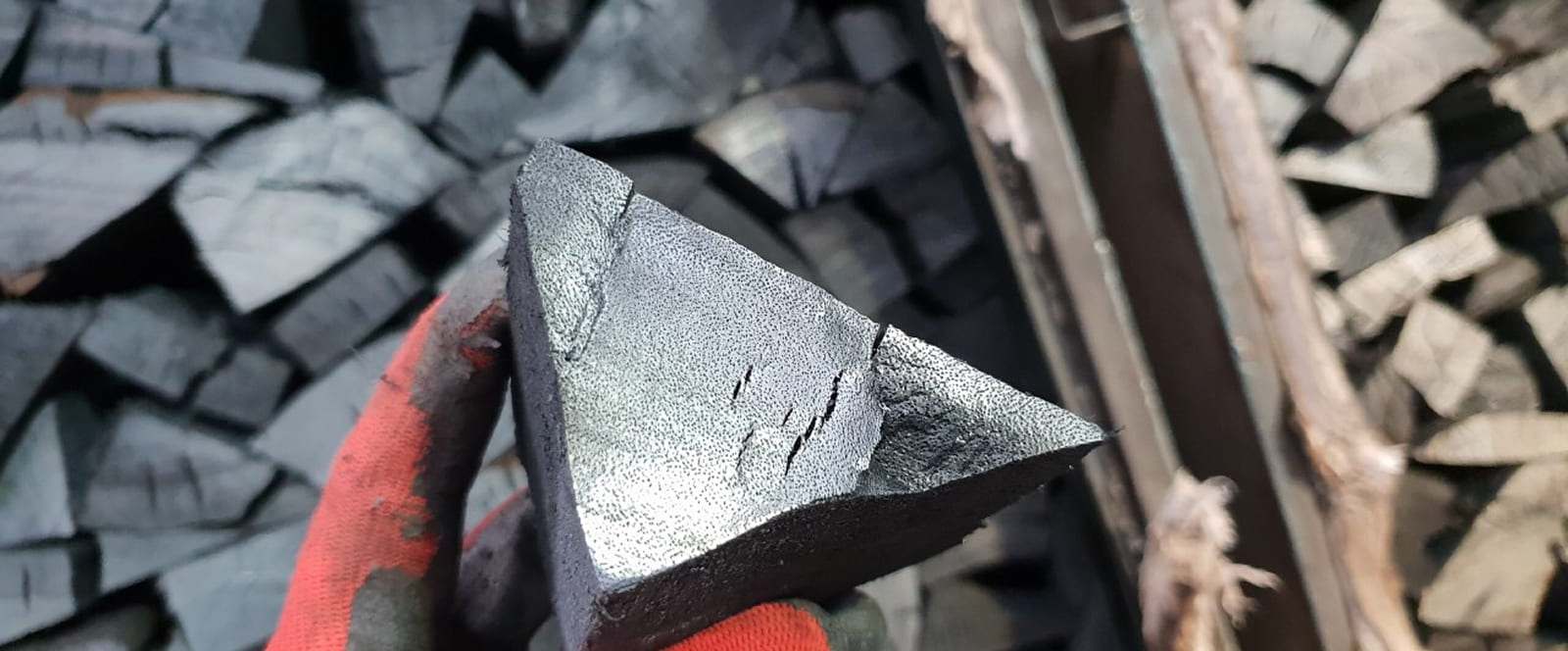
In industrial charcoal production, ash content is often treated as a result of raw material quality. In reality, ash levels are largely influenced by process control — and many problems begin before carbonization is complete.
One of the main hidden factors affecting ash formation is uncontrolled air ingress. When oxygen enters the carbonization zone, partial combustion occurs instead of controlled pyrolysis. This leads to overburning of carbon, structural damage to the product, unstable fixed carbon (Cfix), and increased ash content in the final charcoal.
For industrial charcoal or high quality biochar, even small deviations in oxygen control can compromise batch repeatability and market value.
BIO-KILN, developed by GREENPOWER, addresses this issue through a sealed, temperature-controlled, continuous carbonization system. The process zone of the furnace is built from refractory materials and engineered to minimize air suction. The process is highly automated, significantly reducing the human factor in regulating critical parameters.
Biochar or charcoal temperature control of material movement ensures a stable residence time inside the reactor. At the same time, pyrolysis gases are fully combusted in the pyrolysis chamber and afterburner at high temperatures, with extra heat energy production for raw material drying process, ensuring clean operation without liquid by-products.
By minimizing uncontrolled oxidation and maintaining process hermeticity, BIO-KILN helps achieve low ash levels and repeatable product quality — 24/7, without technological stops.
In modern charcoal production, ash is not just a raw material issue. It is a process engineering issue. And it starts with air control.